3 Jun 2026
Venue Rotations Across Seasons Reshape Prediction Reliability in Football Leagues, ATP Circuits, and Thoroughbred Racing Tracks
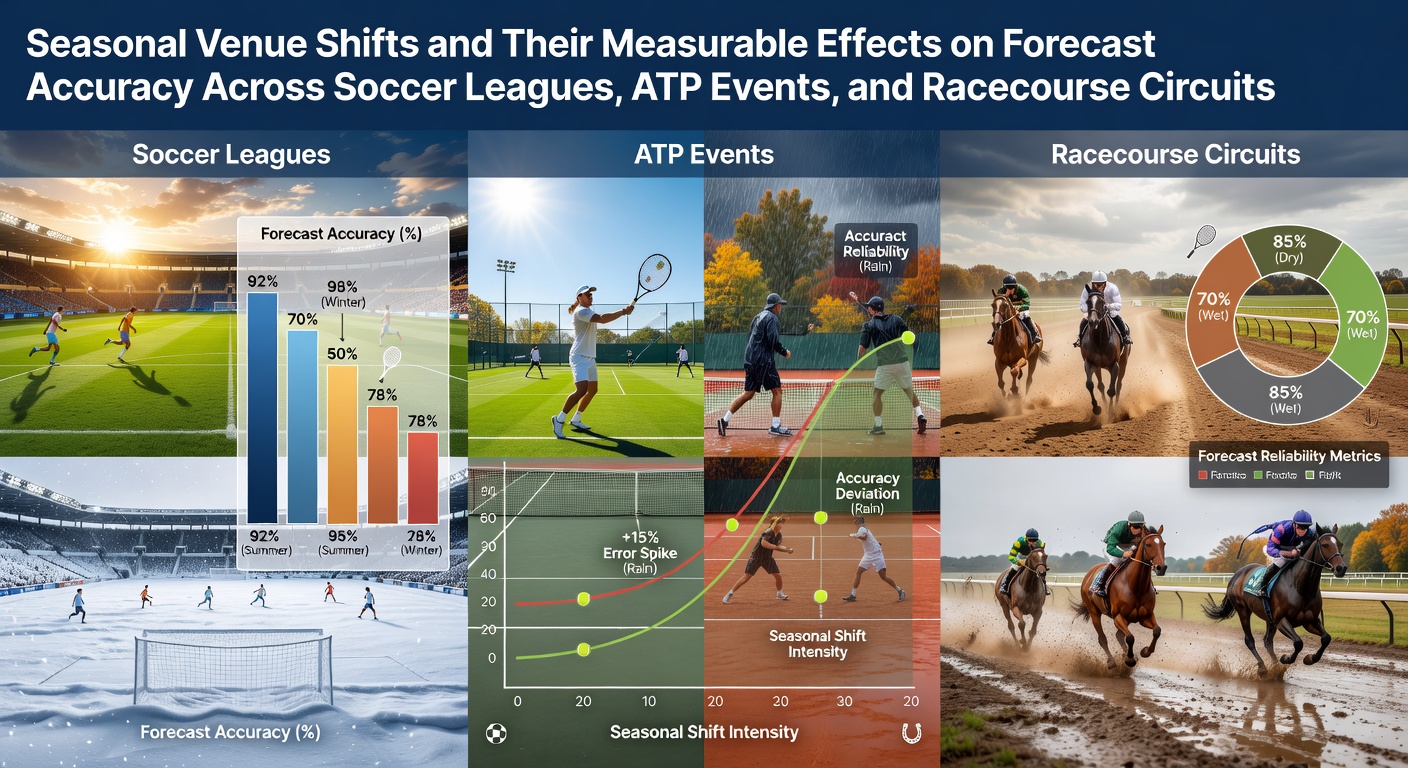
Seasonal venue adjustments occur regularly across soccer leagues, ATP tennis events, and racecourse circuits, with data indicating measurable shifts in forecast accuracy that tipster models and statistical systems must account for each year. These transitions involve changes from grass to clay surfaces in tennis, switches between turf and synthetic tracks in horse racing, plus occasional stadium or climate-related moves in football that alter playing conditions, and analysts track how these factors influence the reliability of pre-event predictions.
Patterns in Soccer League Venue Adjustments
Football competitions experience venue modifications primarily through weather-driven pitch conditions and occasional temporary relocations during major tournaments, while data from multiple European and South American leagues shows that accuracy of goal-scoring forecasts drops when matches shift from temperate spring schedules to hotter summer venues. Researchers tracking performance metrics note that models trained on cooler-season statistics often overestimate scoring rates after these moves, leading to recalibrations in expected-value calculations by mid-June each cycle.
Teams competing in June 2026 qualifiers will encounter similar transitions as leagues resume post-winter breaks, and studies compiled by sports analytics groups reveal that home-advantage percentages fluctuate by as much as 8 percent when stadiums undergo surface renovations or climate zone changes, prompting forecasters to adjust weighting factors in their algorithms accordingly.
ATP Event Surface Changes and Forecast Adjustments
Tennis tours rotate through clay, grass, and hard-court seasons with clear impacts on prediction precision, since player performance data collected on one surface frequently fails to translate directly when events move to another. ATP statistics indicate that serve-accuracy projections hold stronger on faster grass courts yet lose reliability on slower clay, where rally lengths extend and error rates shift, forcing tipster systems to apply surface-specific modifiers during the annual calendar progression.
Those monitoring challenger and main-draw results observe that win-rate forecasts improve when models incorporate venue history alongside player rankings, whereas generic algorithms without surface adjustments show higher deviation from actual outcomes during the transition periods from spring clay swings to summer grass events. June 2026 schedules will again highlight these patterns as the tour moves through European grass-court stops.
Racecourse Circuit Rotations and Equine Performance Data
Horse racing circuits change locations and track types seasonally, moving between turf and all-weather surfaces or between flat and jumps configurations, and performance records demonstrate that speed figures and stamina projections require recalibration after each shift. Data collected across major racing jurisdictions shows that forecast models achieve higher precision when they segment results by track category rather than applying uniform metrics across an entire season.
Observers note that maiden race outcomes and handicap adjustments become less predictable immediately after a circuit rotation because horses encounter new ground conditions, yet accuracy rebounds once sufficient samples from the new venue accumulate. Industry reports from the Australian Racing Board highlight similar trends in southern hemisphere seasons, where synthetic-to-turf transitions produce measurable changes in finishing-time predictions used by analysts.
Cross-Sport Implications for Accumulator and Model Accuracy
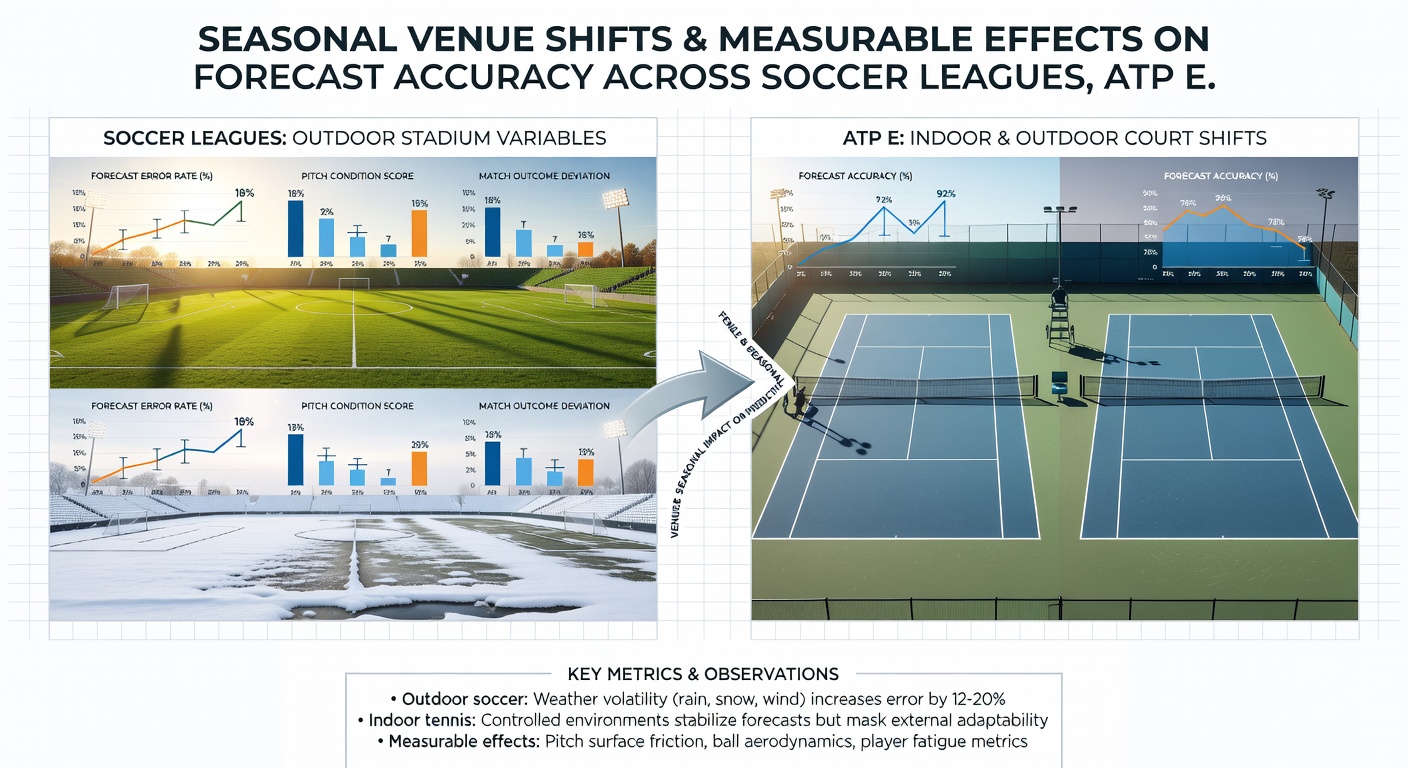
Forecast systems that combine data from soccer, tennis, and racing events must integrate venue-specific variables to maintain consistency, since seasonal shifts affect each sport differently yet share common statistical challenges around sample-size limitations after each rotation. Evidence from multi-sport datasets indicates that combined models incorporating surface, climate, and location adjustments reduce overall error margins compared with those relying solely on historical averages.
June 2026 will bring overlapping seasons across these disciplines, creating opportunities to test updated algorithms against fresh venue conditions in real time. Academic papers published through the University of Queensland sports research program have examined parallel datasets and found that surface-aware models outperform baseline versions by measurable margins when predicting outcomes across all three sports during transition months.
Conclusion
Venue rotations tied to seasonal calendars produce documented changes in forecast accuracy across soccer leagues, ATP events, and racecourse circuits, with statistical evidence showing that surface-specific and location-adjusted models deliver more reliable projections than static approaches. Continued monitoring of performance data through 2026 will further refine these adjustments as new venue histories become available.