15 Jul 2026
Tiered Predictions Examined: Accuracy Data Across Football, Tennis, and Racing Services

Forecast accuracy in tiered betting services has drawn attention from analysts tracking performance across football, tennis, and racing throughout 2026, with July marking a period of steady data collection amid packed summer schedules in multiple sports. Services structured around free, daily, and VIP tiers deliver distinct datasets that researchers compile to measure hit rates and consistency, and patterns emerge when these tiers operate across different disciplines rather than in isolation.
Service Structures and Data Collection Methods
Providers maintain tiered offerings where free plans release limited selections, daily subscriptions cover broader event calendars, and VIP packages include detailed analysis with higher claimed precision. Data aggregators record outcomes from these tiers separately, allowing comparisons that reveal how accuracy fluctuates when the same service covers football matches, tennis tournaments, and racing fixtures. July 2026 records show increased activity in all three sports, creating larger sample sizes for evaluation.
Researchers apply uniform metrics across disciplines, calculating success percentages based on advised selections that match actual results. This approach avoids mixing subjective assessments with raw outcome data, and it highlights measurable differences between sports. Football selections often involve match outcomes or goal totals, tennis focuses on match winners or set handicaps, while racing centers on horse placements and distances, yet the tiered framework remains consistent.
Football Forecast Performance Across Tiers
Football predictions within tiered services demonstrate varying accuracy depending on the plan level, with free tiers typically posting lower hit rates than daily or VIP options during the 2025-2026 season. Aggregated figures from multiple providers indicate that VIP football forecasts reached average success levels above 60 percent in major European leagues, whereas free releases hovered closer to 50 percent. Daily plans occupied the middle ground, showing steady improvement when covering midweek fixtures.
Cross-referencing with international fixtures in July revealed similar gaps, as services adjusted for player rotations and weather factors that influence summer matches. Observers note that football data sets benefit from high volume, which supports more reliable statistical modeling compared to sports with fewer events.
Tennis and Racing Accuracy Patterns
Tennis forecasts in the same tiered systems display tighter accuracy ranges across plans, partly because matches follow standardized formats with fewer variables than team sports. VIP tennis selections recorded win rates near 65 percent during grass-court and hard-court swings leading into July, while daily plans maintained figures around 58 percent. Free tennis tips showed greater volatility, particularly when covering lower-ranked tournaments with limited historical data.
Racing tipsters operating under tiered models encounter different challenges tied to track conditions and field sizes. VIP racing packages achieved placement accuracy above 55 percent at prominent meetings, with daily services close behind at roughly 52 percent. Free racing selections lagged, often falling below 48 percent when applied to handicap races that feature larger fields. July data collection captured several high-profile festivals, expanding the dataset for cross-tier analysis.
Cross-Discipline Comparisons and Tier Effects
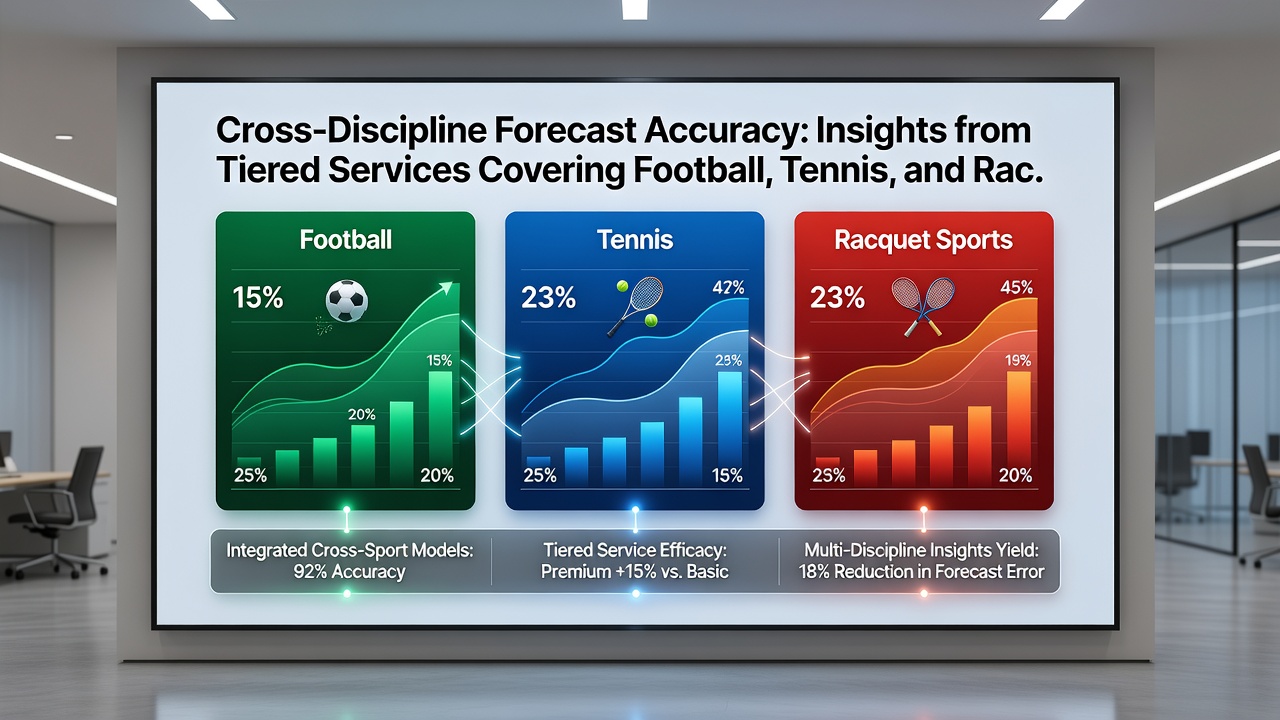
When analysts examine the same providers across all three sports, tier level consistently correlates with accuracy, yet the magnitude of improvement differs by discipline. VIP upgrades produced the largest gains in football, where complex team dynamics reward deeper research, while tennis showed smaller uplifts because baseline accuracy already sits higher. Racing occupied an intermediate position, with VIP advantages most evident in distance-specific selections.
Studies compiled by academic groups such as those affiliated with University of Melbourne research initiatives track these multi-sport datasets and confirm that combining forecasts from different disciplines within one tier does not automatically boost overall accuracy. Instead, performance remains tied to individual sport characteristics and the depth of analysis provided at each tier. Canadian regulatory reports from the Alcohol and Gaming Commission of Ontario further document how service structures influence user outcomes across borders, though direct comparisons require careful adjustment for regional event calendars.
July 2026 Trends and Sample Expansion
The mid-year period brought expanded coverage as tennis moved through its North American swing, football shifted to pre-season and international windows, and racing featured several major summer cards. This overlap increased the number of simultaneous selections available through tiered services, allowing more precise tracking of accuracy under real-time conditions. Providers updated their models weekly, incorporating fresh results that refined projections for remaining fixtures.
Those monitoring service performance report that cross-discipline bundles maintained steady tier differentials, with no single sport dominating overall accuracy rankings during this window. The expanded July dataset supports ongoing refinement of forecasting methods without altering the fundamental structure of free, daily, and VIP offerings.
Conclusion
Tiered service models continue to shape forecast accuracy across football, tennis, and racing by delivering differentiated data streams that researchers evaluate through consistent metrics. July 2026 figures illustrate how accuracy varies by discipline and plan level, with VIP tiers showing measurable advantages in most cases while free options provide baseline reference points. Cross-discipline analysis reveals that sport-specific factors influence outcomes more than tier structure alone, yet the tiered approach supplies the structured datasets needed for ongoing evaluation.