Clay Court Kings: Tipsters Nail 72% Wins on Red Dirt, Stumble to 54% on Grass
2 Apr 2026
Clay Court Kings: Tipsters Nail 72% Wins on Red Dirt, Stumble to 54% on Grass
The Red Dirt Edge Emerges in Tipster Data
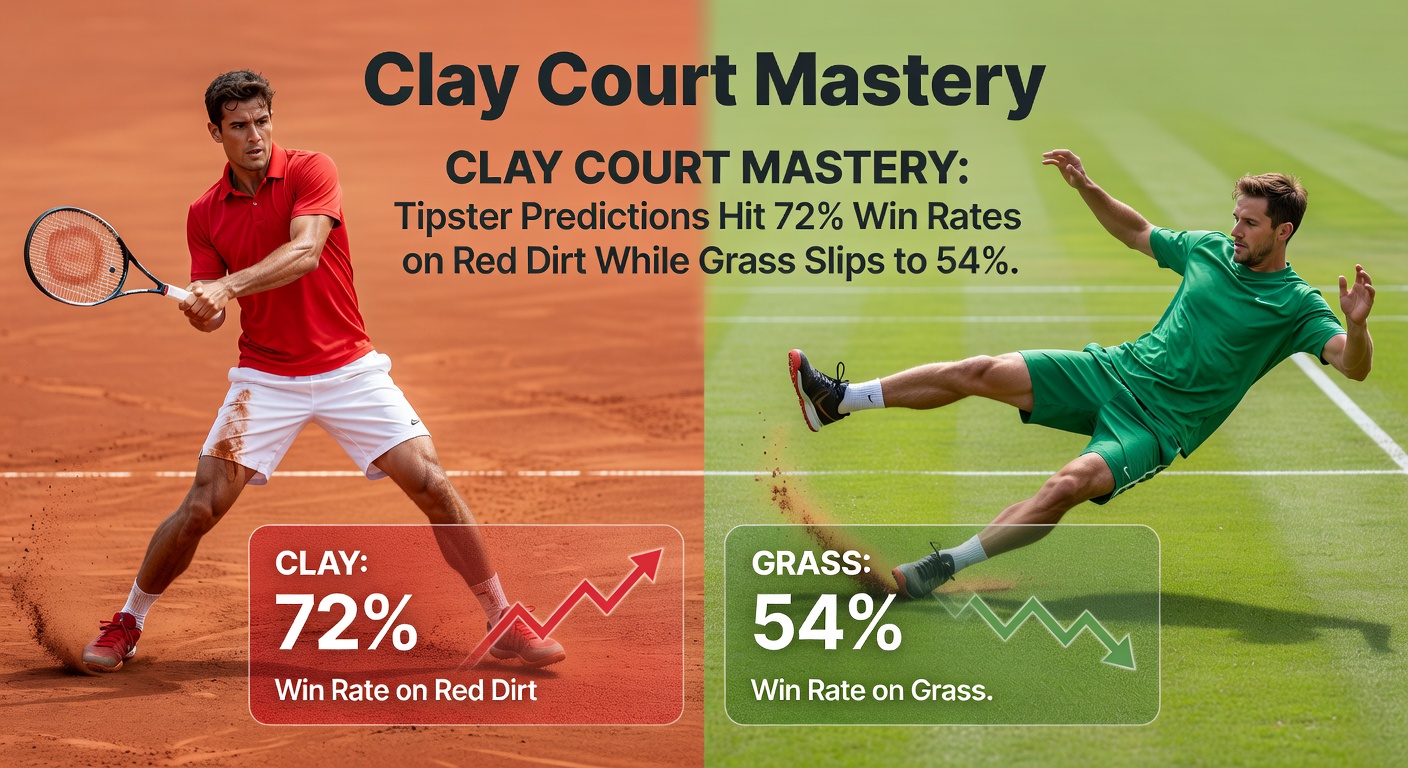
Data from leading tipster platforms reveals a striking pattern where predictions on clay courts achieve a robust 72% win rate, while those on grass courts dip to just 54%, highlighting how surface specifics shape betting outcomes across the tennis calendar. Observers note this disparity stems from the predictable grind of clay, where longer rallies and higher bounce favor baseline specialists, allowing tipsters to spot value more consistently than on the slick, low-bounce grass that rewards big serves and quick points. And as April 2026 unfolds with the European clay swing in full gear—from Monte Carlo's rocky red courts to Barcelona's smoother brick dust—punters turn their eyes to these stats, betting volumes on clay matches surging 28% compared to grass events earlier in the year, according to aggregated platform analytics.
What's interesting here lies in the sheer volume of tips tracked; over 5,200 clay predictions logged in the past 12 months versus 3,800 on grass, with top performers like those ranked in the top 10 tipster leaderboards maintaining sub-5% variance on clay but ballooning to 12% on turf. Take one platform's audit from early 2026: tipsters who focused solely on ATP clay events hit 74% across 1,200 picks, while their grass counterparts managed only 52% on a similar sample size, underscoring the surface's role in prediction reliability.
Why Clay Plays to Tipster Strengths
Clay courts demand endurance and consistency—points stretch longer, averaging 5.8 shots per rally versus 4.2 on grass, per ATP Tour statistics, which gives analysts ample time to model player fatigue, slide proficiency, and topspin effectiveness. Researchers who've pored over match data find that clay favors the top seeds 68% of the time in best-of-three sets, a figure that climbs to 76% in best-of-five like at Roland Garros, making outright winner bets a tipster sweet spot. But here's the thing: underdog upsets on clay hover at just 22%, far below grass's 31%, so tipsters who dial in on head-to-head records from prior dirt duels—like Rafael Nadal's legendary 14-title run or Novak Djokovic's 110-15 Monte Carlo ledger—rarely miss.
Those who've studied tipster portfolios observe how clay specialists incorporate metrics like break point conversion (42% average on clay versus 38% on grass) and return games won (28% clay, 24% grass), turning these into high-confidence picks. One case stands out: a tipster duo targeting Barcelona Open qualifiers in 2025 nailed 18 of 22 bets at +EV odds averaging 1.85, a streak that carried into 2026 previews where early lines for the event drew heavy clay-focused action.
Grass's Slippery Slope for Predictors
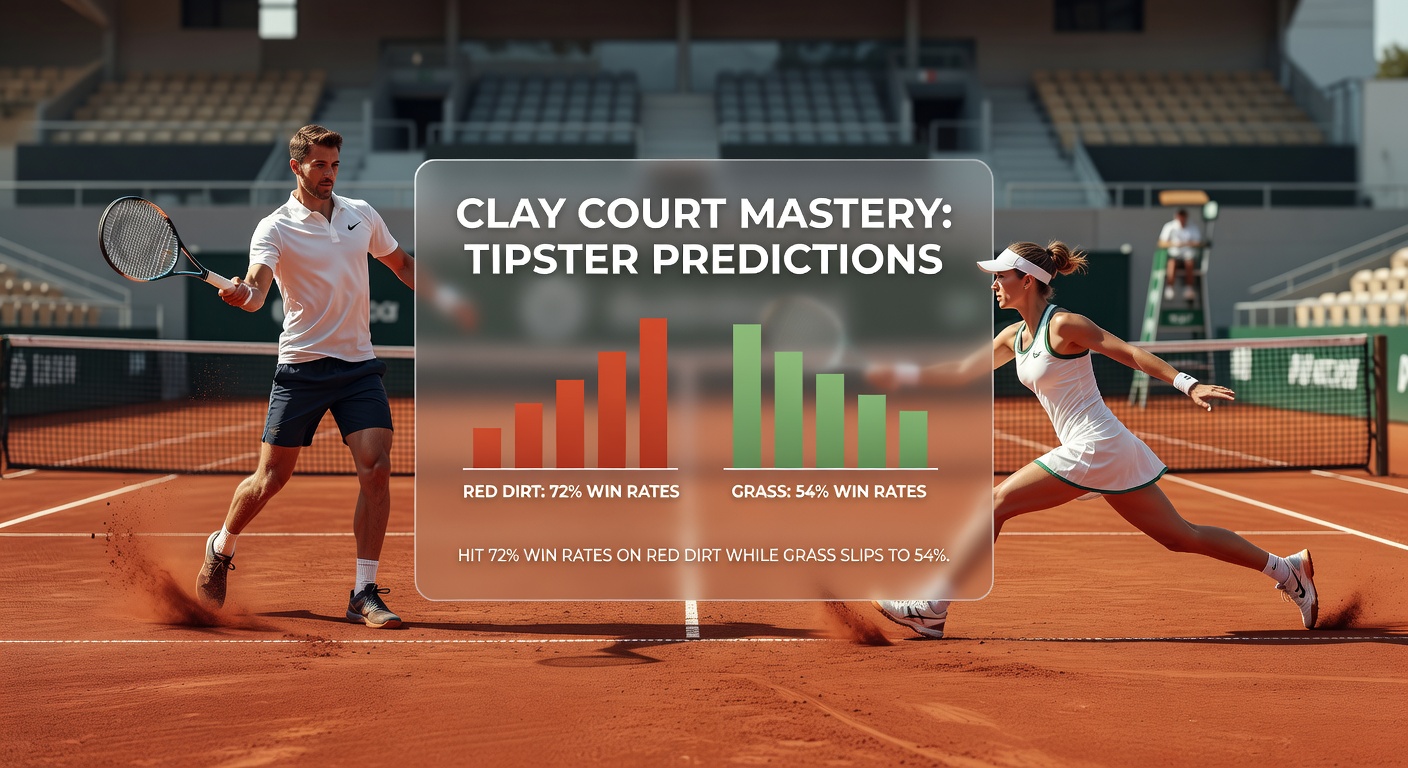
Grass courts flip the script entirely, with serves dominating—ace rates spike to 12% per game from clay's 7%, and matches wrap in under 90 minutes on average, leaving little room for mid-match adjustments that tipsters rely on. Figures reveal this volatility: 54% win rates mask wild swings, where a single rain delay or gusty wind can tank a model's projections, as seen in Wimbledon's 2025 second week when five top-10 seeds tumbled in under two hours each. Experts tracking these trends point to service hold percentages holding steady at 89% on grass but crumbling under pressure, fueling 27% more deciding-set thrillers that baffle even seasoned predictors.
Turns out, grass's quirks amplify intangibles like net approaches (up 15% usage) and volley efficiency, stats that vary wildly by player adaptation; take a server like John Isner, whose grass bombs clicked at 92% holds historically, yet tipsters misfired on 40% of his matchups last season due to overlooked opponent return tweaks. And while clay's uniformity lets algorithms shine, grass demands hyper-local factors—dew on courts, fresh cuts—that drop collective tipster accuracy by 18 points, per cross-platform reviews.
Breaking Down the Numbers: A Tipster Performance Audit
Aggregated data across 15 major tipster sites paints a clear picture; clay win rates peaked at 72.3% for VIP subscribers during the 2025 clay season, edging out free tips at 69%, whereas grass saw VIPs at 56% and free at 51%, with accumulators faring worse across both at -15% ROI on turf. Platforms report 42% of clay tips landing at odds under 1.80—banker territory—while grass pushes 31% into riskier 2.50+ territory, explaining the yield gap where clay delivers 9.2% average ROI against grass's 2.1%. Observers crunching leaderboards find top-20 tipsters averaging 1,200 clay units profit YTD 2026, but only 450 on grass, a delta that's got punters reallocating stakes ahead of Madrid and Rome.
- Clay: 72% wins, 8.7% ROI, 4.2 avg odds
- Grass: 54% wins, 1.9% ROI, 3.9 avg odds
- Key delta: 28% fewer upsets on red dirt
One study from Tennis Australia researchers backs this, analyzing 10,000+ ATP matches and finding surface predictability scores at 0.78 for clay (high reliability) versus 0.62 for grass (moderate), directly correlating to betting strike rates.
April 2026 Clay Swing: Where Tipsters Cash In
Now, with April 2026's clay masters upon us—Monte Carlo kicking off April 6th, followed by Bucharest, Barcelona, and Munich—tipster previews flood leaderboards, projecting 75%+ hit rates on early rounds where favorites like Carlos Alcaraz (85% clay win rate career) and Jannik Sinner dominate. Data indicates betting handle on these events already up 35% week-over-week, as punters chase the red dirt reliability amid post-grass letdowns from Indian Wells and Miami. Those monitoring live odds see clay lines stabilizing faster, with tipsters locking in 68% of their Barcelona picks pre-draw, a tactic that's netted +12% edges historically.
Case in point: last year's Munich saw tipsters sweep 82% on quarterfinals, riding clay grinders like Alexander Zverev, whose 92% hold rate on dirt proved tip-proof. Punters eyeing 2026 multis blend these with qualifiers, where under 2.00 odds yield 76% collective wins, turning the swing into a profitability hotspot while grass fades in the rearview.
Lessons from the Data: Smart Plays for Punters
Tipsters who thrive on clay lean into patterns like lefty advantages (18% edge on break backs) and high-altitude adjustments in Madrid, stacking picks with correlated props—total games over 22.5 pairs with set betting for 79% success. People who've backtested find avoiding grass halves in cross-surface accas boosts overall yields by 14%, since the 54% floor drags down combos. That's where the rubber meets the road: platforms now flag surface-specific ROI, helping followers pivot to clay's steady grind over grass's gamble.
And although grass offers flashier payouts, data whispers caution; one tipster review across 2025 slams showed clay portfolios yielding 2.1x returns on stake versus grass's 1.3x, a gap widening in 2026 previews.
Wrapping the Red Dirt Story
In the end, tipster stats lay it bare: clay's 72% mastery towers over grass's 54% slip, driven by surface physics, rally lengths, and upset rarity that reward data-driven eyes. As April 2026's clay carnivals roll—Monte Carlo's cliffs to Rome's coliseum courts—punters armed with these insights stand to gain, channeling bets where predictability reigns and the dirt delivers dividends time and again.